

2026 GOLD UPDATES
Current prices offer an opportunity to build an allocation to gold as a sensible diversifier for portfolios. Gold prices in a rising rate environment have exhibited a pattern of initial weakness, followed by a recovery towards the end of the rate hike cycle. Structural demand drivers, including central bank demand, market uncertainty, and the adoption of gold as a portfolio diversifier remain intact.
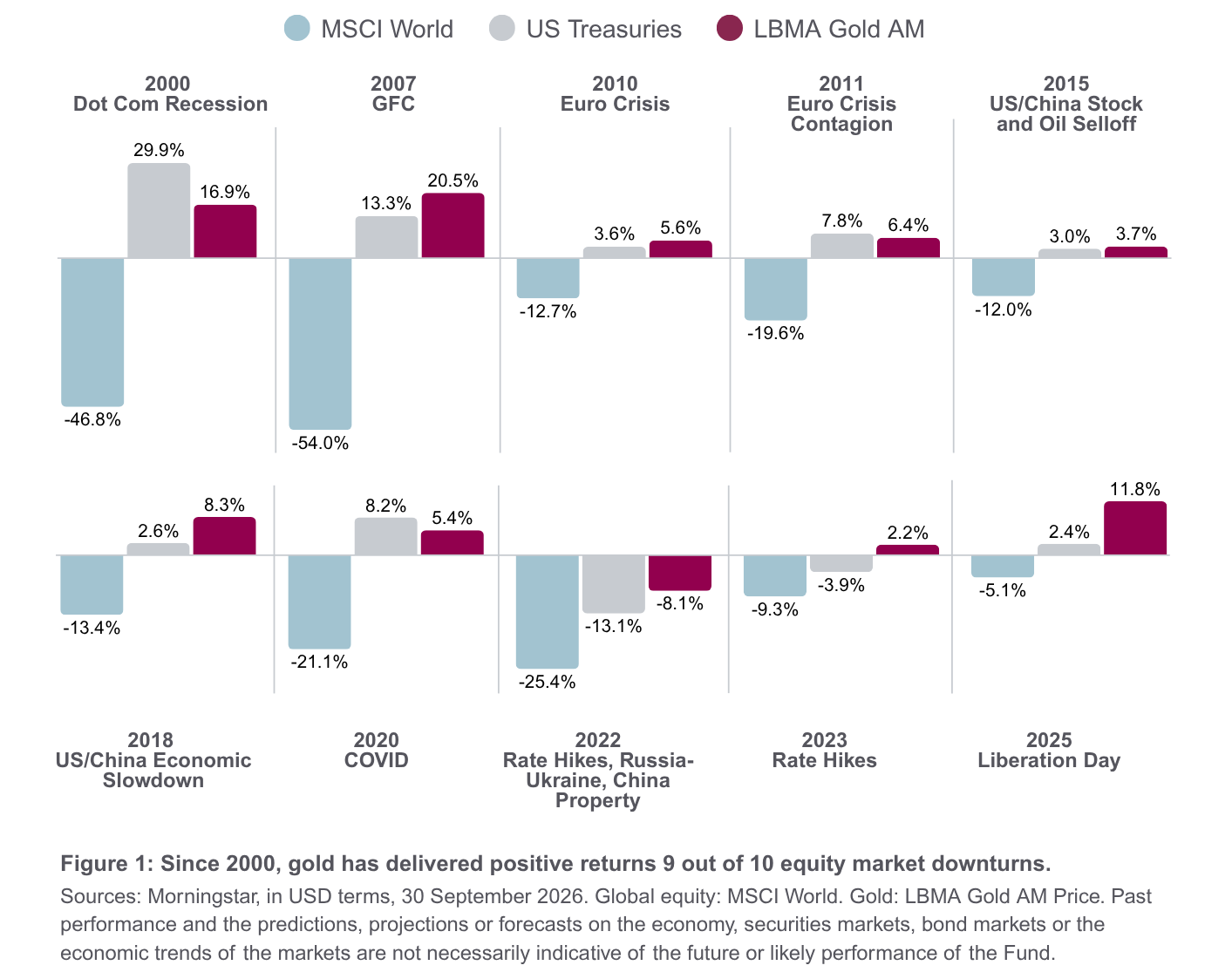
In a portfolio context, it is important to have assets that move in a low or uncorrelated manner, and gold is an asset class that has different price actions under various economic conditions and inflation regimes. Having said that, we have also seen in a systemic risk-off environment, that gold is also not spared. For example, earlier this year, the central bank of Turkey sold gold holdings to pay for the purchases of oil and energy when the Iran conflict started. Investors sell what they can and not necessarily what they should. This highlights the nature or characteristics of money.
Risk-to-Reward profile of Gold in an Investment Portfolio
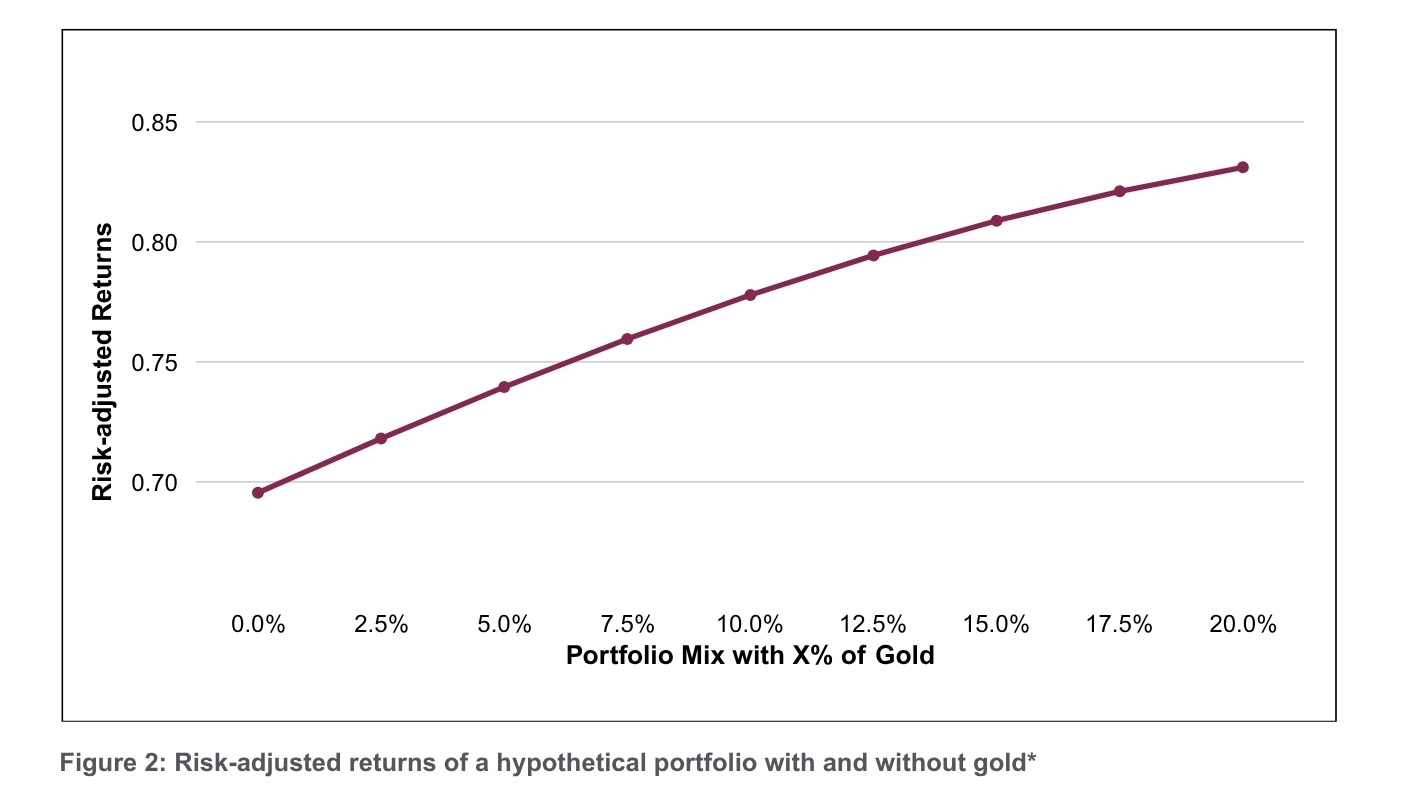
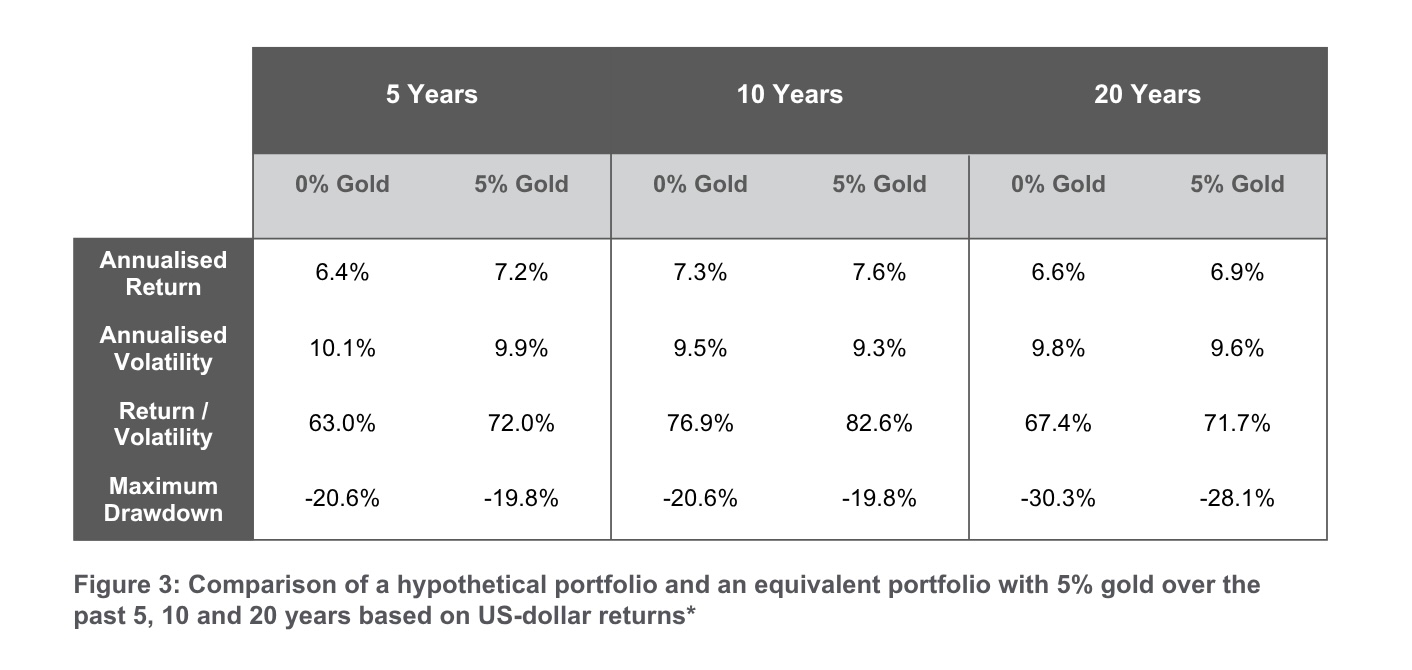
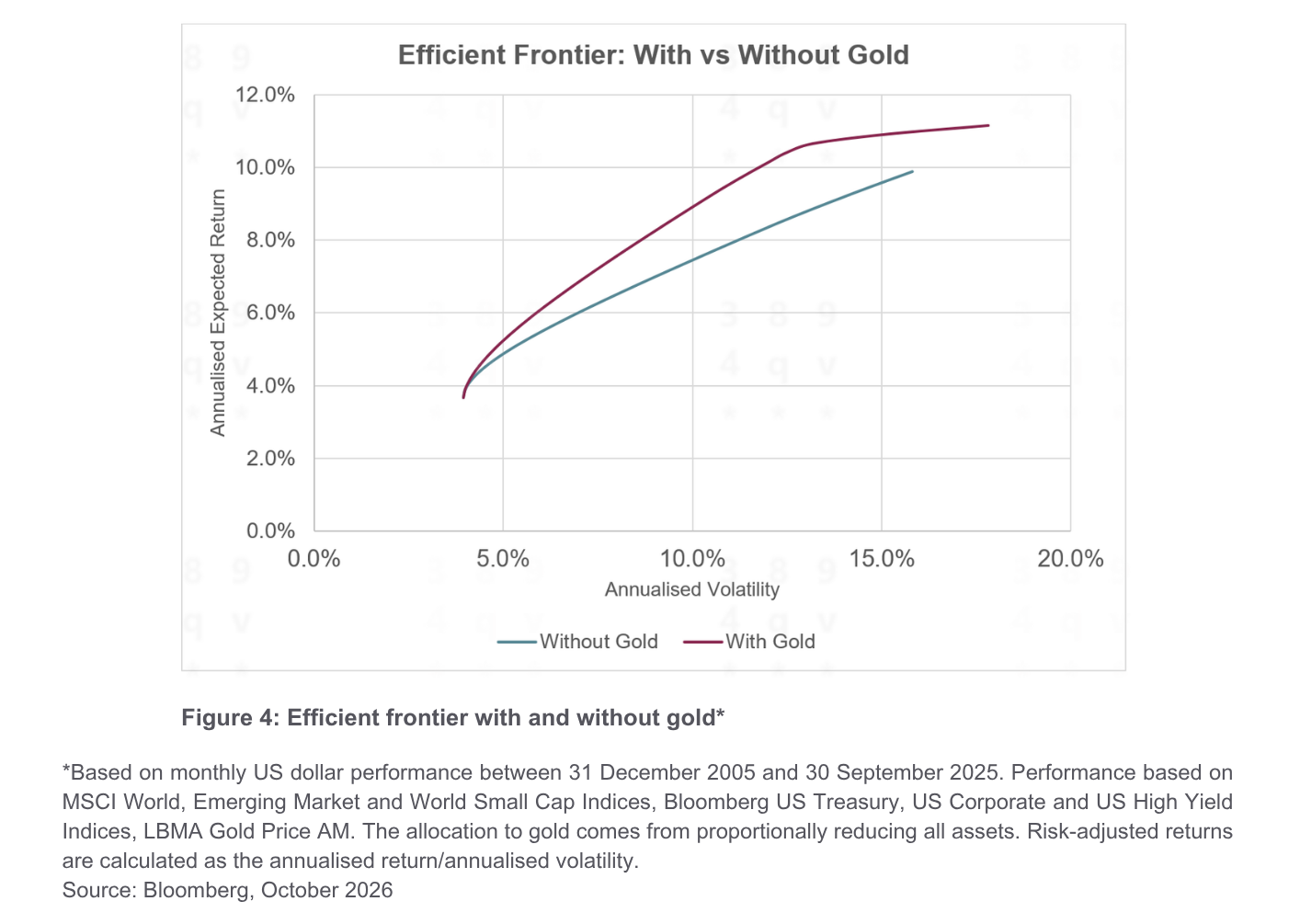
Gold’s attributes of long-term return potential, liquidity and diversification benefits can strengthen overall portfolio outcomes. Taken together, these characteristics suggest that a strategic allocation to gold can enhance a portfolio’s risk-adjusted return profile.
Analysis across 5-, 10- and 20-year periods illustrates the potential contribution of gold within a diversified institutional portfolio. Based on a hypothetical portfolio comprising 50% equities and 50% fixed Income, increasing allocation to gold, between 2.5% and 20%, would have resulted in higher risk-adjusted returns and lower drawdowns (Figure 2, 3 & 4)
Demand and Supply
A surge in US Treasury yields and the US dollar alongside a drop in futures positions helped drive prices lower in September 2026, despite impressive gold ETF (exchange-traded fund) inflows. Global physically-backed gold ETFs attracted US$10bn in September 2026, lifting 3Q inflows to a record US$31bn, led by European- and North American-listed fund. Despite lower gold prices, global holdings rose 67 tonnes to a record of 4,256 tonnes. Year-to-date till September, the biggest growth of +23.7% is from Asia ahead of other regions. Meanwhile, 2Q 2026 total gold supply was 1269 tonnes, 0% year-on-year.
Central Bank gold demand remains strong at approximately 79 tonnes in August 2026, more than pre-2022 of 17 tonnes, with China accounting for a large share. Emerging market central bank especially China, remain underweight gold relative to plausible long-term allocations, while the motivation for diversifying away from Group of 7 (G7) reserve currencies, including geopolitical and financial risk likely remain in place. Increasingly the debate shifted from “whether to own gold” to “where to store it”, revealing concerns around security and cross-country trust. Foreign Central Bank holdings in New York Fed fell by 40 tonnes in August 2026, while custodial holdings at Bank of England rose by 46 tonnes. The continued central bank diversification remains the main structural driver of the constructive view on gold.
Key Features of the LionGlobal Singapore Physical Gold Fund
The LionGlobal Singapore Physical Gold Fund offers a convenient way to gain direct exposure to physical gold held in Singapore. The Fund is backed by allocated investment-grade gold meeting London Bullion Market Association (LBMA) standards^, with no derivative exposure. Its allocated gold holdings are securely stored at Le Freeport Singapore and fully insured against loss, theft and damage while in custody and transit, subject to standard exclusions.
^LBMA GOLD PRICE IS A TRADE MARK OF PRECIOUS METALS PRICES LIMITED, IS LICENSED TO ICE BENCHMARK ADMINISTRATION LIMITED (IBA) AS THE ADMINISTRATOR OF THE LBMA GOLD PRICE, AND IS USED BY LION GLOBAL INVESTORS LIMITED WITH PERMISSION UNDER LICENCE BY IBA.
All data are sourced from Lion Global Investors and Bloomberg as at 2 November 2026 unless otherwise stated.


